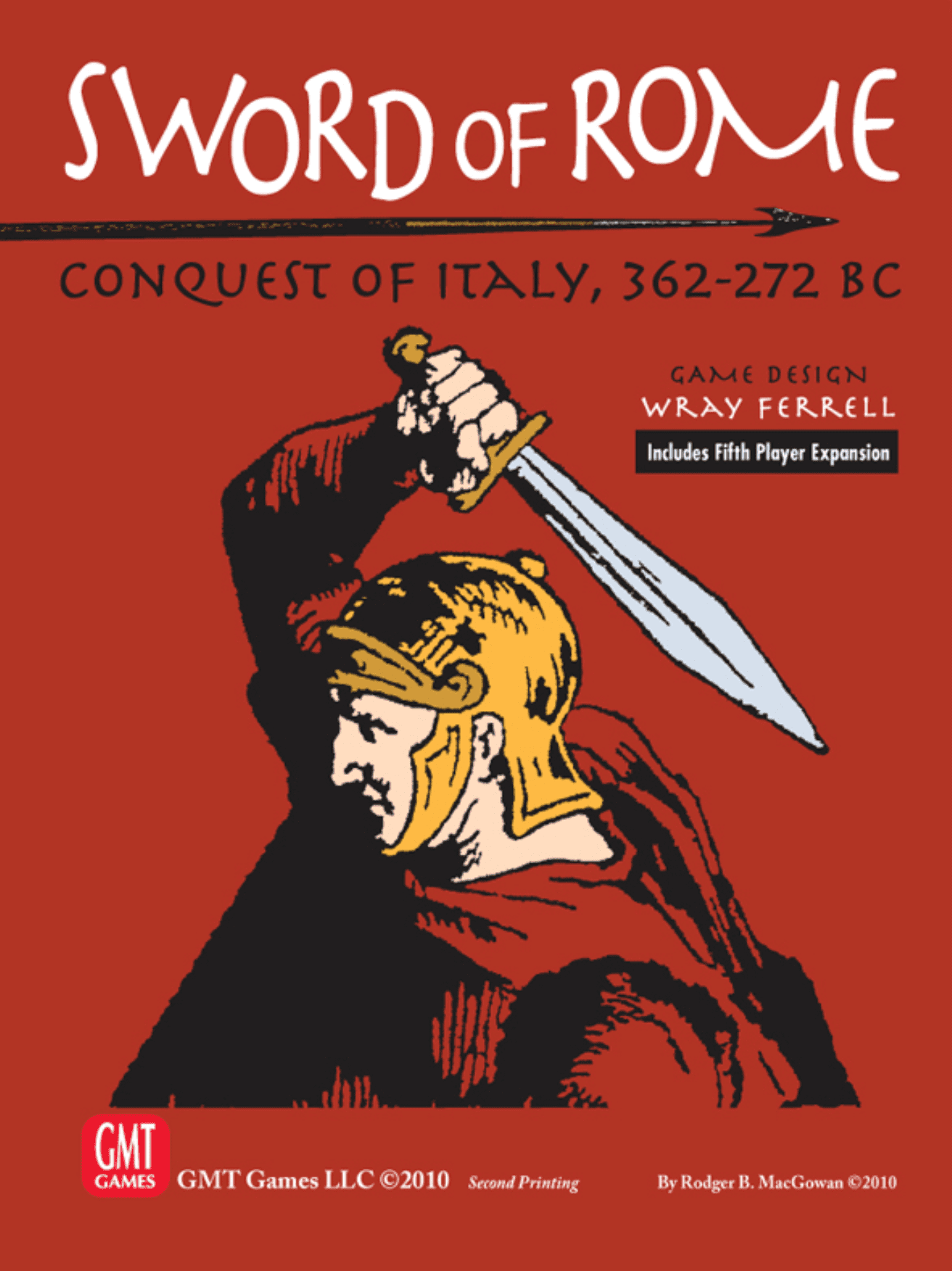
Sword of Rome: Conquest of Italy, 362-272 BC
- Designer Wray Ferrell
- Publisher GMT Games
- Illustration Rodger B. MacGowan , Mark Simonitch
Track your results with Playnexi
Add this game to your collection and track sessions, scores, and statistics.
Start for freeWhat to Expect
Players reenact the brutal struggles among Italy and Sicily's peoples in the 4th and 3rd centuries BC using card-driven battles, event cards, and point-to-point movement on a detailed historical map. The game covers over 100 years of classical history in nine hands of cards, with each faction featuring unique strengths and diplomatic options. Strategic planning and tactical warfare determine control of the western Mediterranean.
Who Is This Game For?
Sword of Rome targets experienced gamers and experts who enjoy complex historical strategy games with long playtimes (around 6 hours). It requires patience and strategic thinking, is not a family game, and lacks solo mode support.
How It Works
The game uses a campaign/battle card-driven system where dice rolls and event cards influence combat outcomes. Players move units point-to-point on the map, leverage variable player powers, and respond to historical events. Diplomacy and strategy are key to conquering territories and outmaneuvering opponents.
What Makes It Special
Designed by Wray Ferrell using Mark Herman's established system seen in Paths of Glory, Sword of Rome won the 2004 Charles S. Roberts Award for Best Pre-World War II Boardgame and the Origins Award for Best Historical Board Game. It belongs to the Ancient series and offers a realistic simulation with varied player powers.
Awards
2005
- 2004 Charles S. Roberts Best Pre-World War II Boardgame — Winner
- 2004 James F. Dunnigan Award — Nominated
- 2004 Origins Awards Best Historical Board Game — Winner
- 2004 Walter Luc Haas Best Simulation — Winner
Pro
- Realistic simulation covering over 100 years of history
- Variable player powers enhance strategic depth
- Award-winning design (Charles S. Roberts, Origins)
- Complex campaign/battle card-driven mechanics
Contra
- Very long playtime (~6 hours)
- No solo mode available
- High complexity demands experience and patience
Setting & Atmosphäre
Set in ancient Italy and Sicily from 362 to 272 BC, the game depicts Rome's conquest period featuring significant historical figures and cultures.
Tipp für Einsteiger
Start by learning the core system to grasp campaign and card management before exploring deeper strategies.
Häufige Fragen
Can I play this solo?
Sword of Rome supports 2 to 5 players and does not include a solo mode.
How long does a game really take?
A game lasts about 360 minutes, roughly 6 hours, requiring a significant time investment.
What prior experience do I need?
The game is aimed at experienced gamers and experts interested in complex wargames and historical simulations.
How does this compare to similar games?
Sword of Rome uses Mark Herman’s proven card-driven battle system with variable player powers set in an authentic ancient setting.
Is this suitable for families?
Due to its complexity, long duration, and minimum age of 12, Sword of Rome is not designed as a family game.
What mechanic makes it special?
The campaign/battle card-driven system combined with point-to-point movement and variable player powers makes it tactically versatile.
Fazit
Sword of Rome is a deep, demanding strategy game for history enthusiasts and wargamers with ample time. Casual or family players may find its complexity and length challenging.