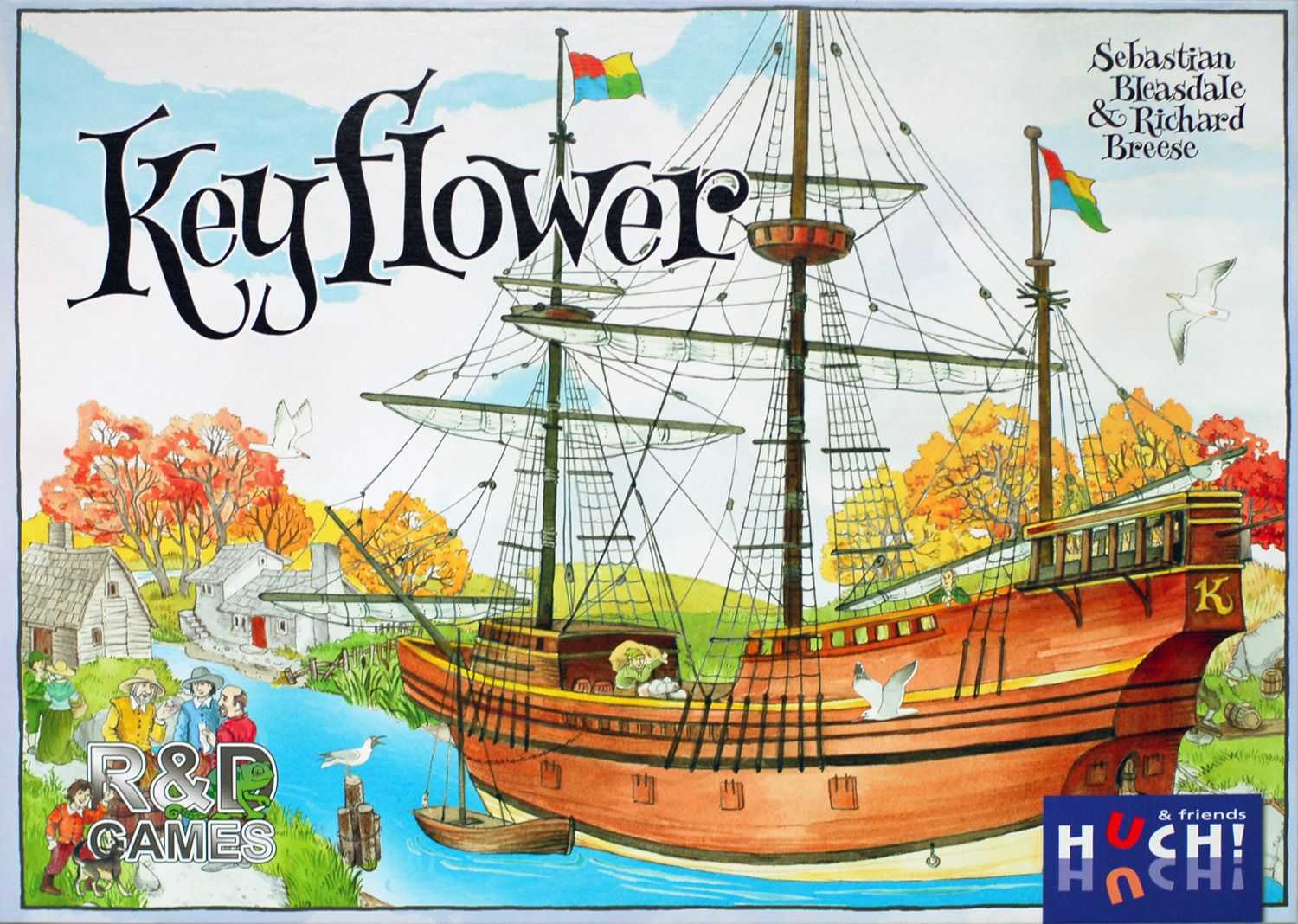
Keyflower
- Designer Sebastian Bleasdale , Richard Breese
- Publisher R&D Games , Arclight Games , Czacha Games , Dice Realm , Ediciones MasQueOca
- Illustration Juliet Breese , J Breese , Gemma Tegelaers
Track your results with Playnexi
Add this game to your collection and track sessions, scores, and statistics.
Start for freeWhat to Expect
You develop a village over four seasons and bid on village tiles in various auction formats. Colored workers are used both to bid and to activate tiles to generate resources, skills and new workers. Each season changes which tiles and workers are available; in winter tile combos score victory points. The mix of tiles ensures high variability and interactive decision-making.
Who Is This Game For?
Keyflower is a strategy game aimed at hobby gamers who enjoy auctions and engine-building, suitable for players who can commit to about 120 minutes. It is more demanding than a typical family game and rewards planning and familiarity with economic mechanics.
How It Works
The core uses multiple auction mechanics (Auction / Bidding, Auction: Fixed Placement, Auction: Multiple Lot) plus Constrained Bidding: players spend colored workers to bid or to use tile actions. Village tiles produce resources, skills and workers; transport and upgrade options interact with route/network building. End Game Bonuses determine final scoring based on combinations of resources, skills and workers.
What Makes It Special
Designed by Richard Breese and Sebastian Bleasdale, Keyflower won the 2012 Jogo do Ano and the 2012 Meeples Choice Award and was nominated for the 2013 Golden Geek Most Innovative Board Game. Its blend of auction systems with engine- and network-building distinguishes it.
Awards
2013
2013
- 2012 Jogo do Ano — Winner
- 2012 Meeples Choice Award — Winner
Pro
- High variability through different village tiles and seasonal changes
- Sophisticated auction system with multiple auction types
- Combination of engine-building and network/route development
- Strong player interaction via shared tile actions and competitive bidding
Contra
- Long playtime (~120 minutes) requires commitment
- Steeper learning curve due to several interacting mechanics
Setting & Atmosphäre
Set in the medieval Key world, play represents the four seasons (spring, summer, autumn, winter) as you develop your village using workers, resources and specialized tiles.
Tipp für Einsteiger
Focus first on understanding the auction types and how tiles generate resources and actions; watch opponents' options before committing bids.
Häufige Fragen
Can I play this solo?
No. Keyflower is designed for 2–6 players.
How long does a game really take?
The listed duration is about 120 minutes; teaching and negotiation can extend that.
What prior experience do I need?
Some familiarity with auction mechanics and engine-building is helpful.
How does this compare to similar games?
Keyflower stands out by combining several auction formats with engine- and network-building rather than focusing on a single core mechanic.
Is this suitable for families?
Less so; the minimum age is 12 and the game’s complexity targets hobby gamers.
What mechanic makes it special?
The variety of auction mechanisms (including constrained bidding) paired with network-and-route-building is a defining feature.
Fazit
Strong recommendation for hobby gamers who like auctions and interaction; plan for a 120-minute session. Less suitable for players seeking quick or light games.