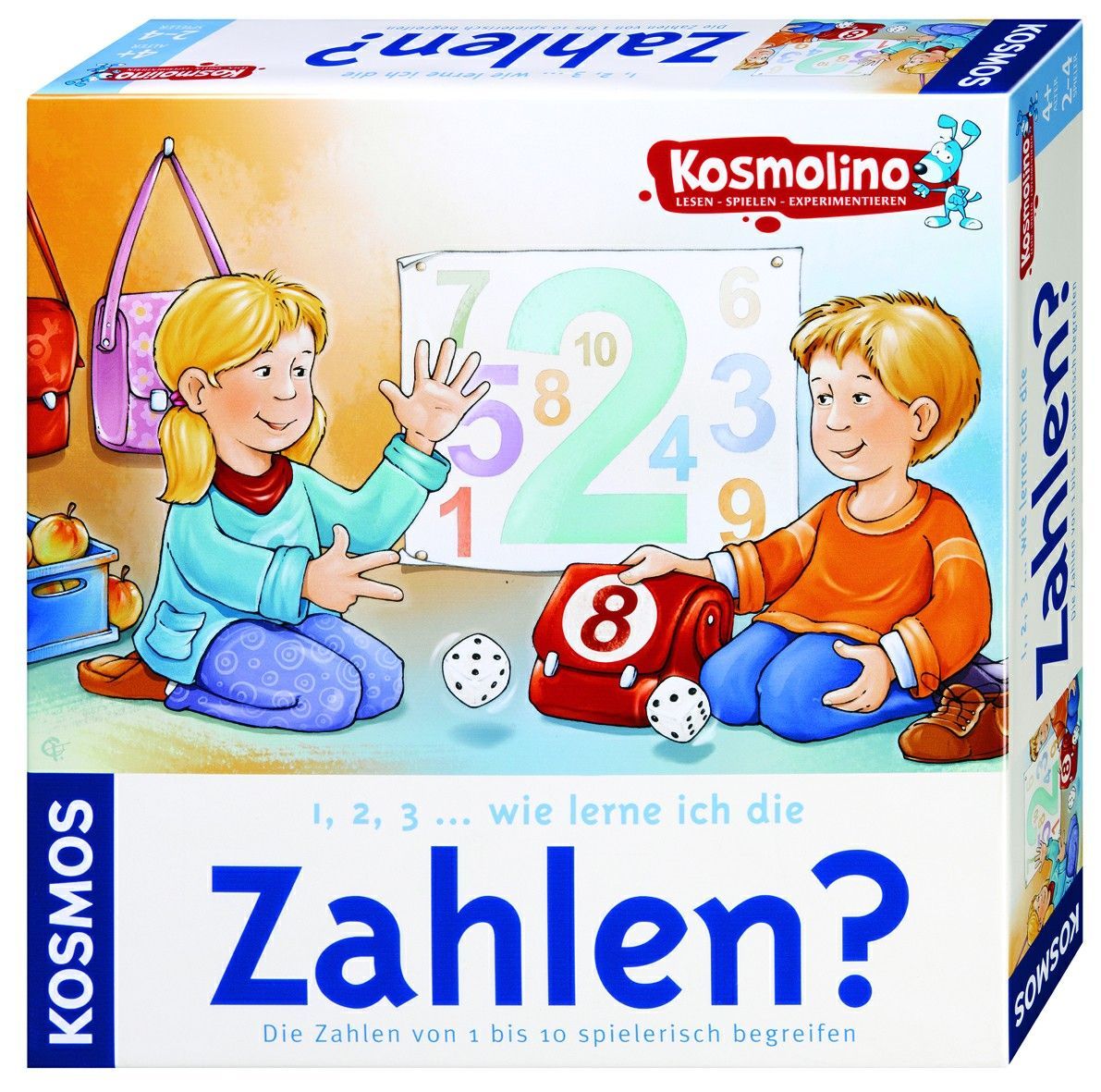
1, 2, 3 ... wie lerne ich die Zahlen?
- Designer Andrea Bordihn , Prof. Dr. Gerhard Friedrich
- Publisher KOSMOS
- Illustration Oliver Freudenreich
Track your results with Playnexi
Add this game to your collection and track sessions, scores, and statistics.
Start for freeWhat to Expect
In this game, players work together as a team to correctly place shoes, boxes, and bags. The goal is to collectively position all items before too many feet appear on the Fridolin strip. Tactical cooperation is essential to win. The game teaches counting and number concepts in a playful way for children.
Who Is This Game For?
This game is aimed at children and families who want to learn counting together. It is a pure children's game with a short playing time of about 15 minutes and requires no prior experience. Perfect for beginners discovering basic math concepts through play.
How It Works
Players use Roll / Spin and Move mechanics to advance their pieces based on dice rolls. Teamwork is central, as all players win or lose together. Tactical placement of pieces on the board helps achieve the common goal effectively.
What Makes It Special
Designed by Andrea Bordihn and Prof. Dr. Gerhard Friedrich, this cooperative children's game uses Team-Based Game and Roll / Spin and Move mechanics to foster numerical understanding. It has no awards but focuses on educational play.
Pro
- Encourages numerical understanding playfully
- Cooperative team play strengthens collaboration
- Short playing time around 15 minutes
- Suitable for children without prior experience
Contra
- No solo variant available
- Limited complexity for older players
- No specific theme or immersive setting
Setting & Atmosphäre
The game has an educational theme centered on numbers and counting without a specific fictional setting. It is designed as a learning tool for children.
Tipp für Einsteiger
Focus on teamwork and use tactical piece placement to reach your shared goal.
Häufige Fragen
Can I play this solo?
No, the game is designed for 2 to 4 players and does not support solo play.
How long does a game really take?
A game takes about 15 minutes, making it ideal for short sessions.
What prior experience do I need?
The game is designed for children with no previous experience and is easy to learn.
How does this compare to similar games?
It is a cooperative learning game focused on numbers and teamwork, unlike typical competitive games.
Is this suitable for families?
Yes, it is specifically designed for families with children to learn numbers together.
What mechanic makes it special?
The combination of Roll / Spin and Move with Team-Based Game mechanics promotes cooperation and tactical thinking.
Fazit
A suitable learning game for children to practice numbers in a team. Its short duration and simple rules make it ideal for families with young kids.