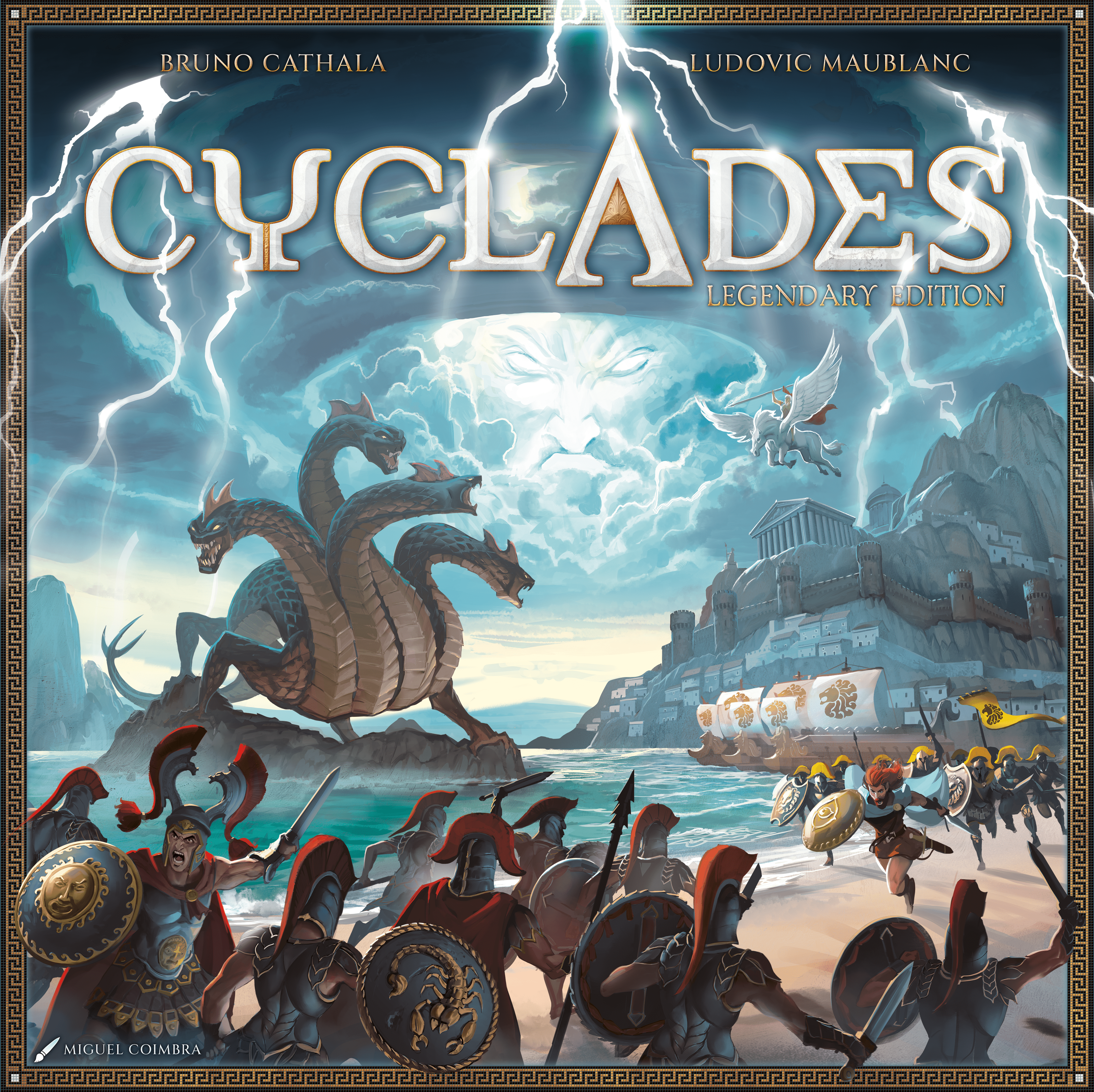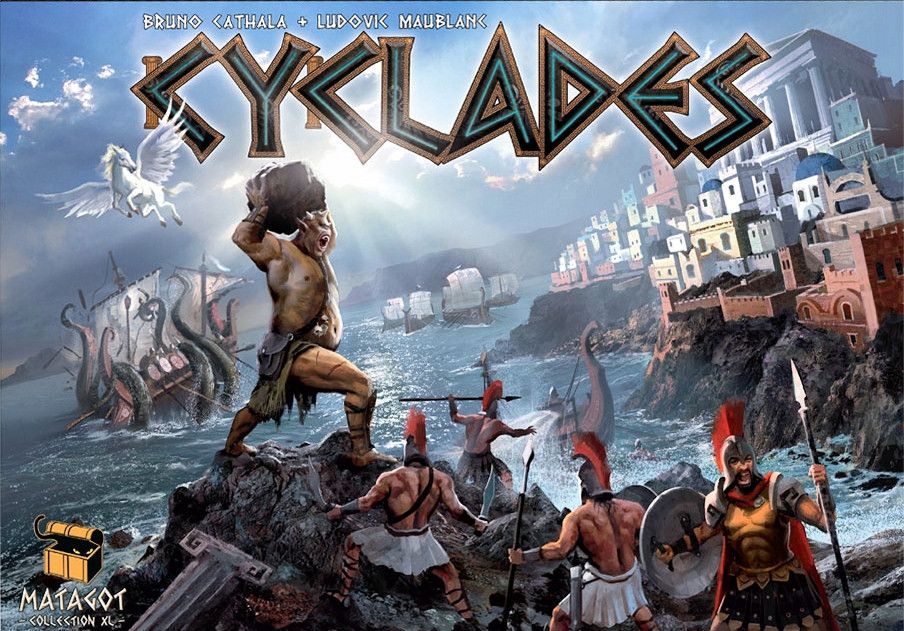
Cyclades
- Designer Bruno Cathala , Ludovic Maublanc
- Publisher Matagot , asmodee , Asterion Press , Bureau de Juegos , CrowD Games
- Illustration Miguel Coimbra
Track your results with Playnexi
Add this game to your collection and track sessions, scores, and statistics.
Start for freeWhat to Expect
In Cyclades, 2 to 5 players compete to gain the favor of the gods and build two cities first on the Greek island group. Players bid for the gods' favors each turn, which grant different powers: Ares controls armies and fortresses, Poseidon moves fleets and builds ports, Zeus hires priests and builds temples, Athena provides philosophers and universities, and Apollo increases income. The game mixes auctions, area control, and dice rolling in a tactical race.
Who Is This Game For?
Cyclades is aimed at experienced gamers aged 13 and up who enjoy complex strategy games with interaction and multiple players. The 90-minute playtime requires patience and planning, and the mechanics like auction and area control need some prior experience. It is less suitable for families and more for Eurogame enthusiasts.
How It Works
Each round, players bid in an auction for the favor of gods, with each god available to only one player per turn. The gods enable different actions: Ares for army movement and fortress building, Poseidon for fleet movement and port construction, Zeus for priests and temples, Athena for philosophers and universities, and Apollo for income increase. The game uses Area Majority, Area Movement, Auction, and Dice Rolling mechanics to gain influence over the islands.
What Makes It Special
Cyclades was designed by Bruno Cathala and Ludovic Maublanc and nominated in 2010 for the Boardgames Australia Awards Best International Game. It combines historical mythology with complex mechanics like Auction/Bidding and Area Majority. The artwork by Miguel Coimbra received awards as well. Cyclades belongs to the Ancient: Greece family and features miniatures and player screens.
Awards
2010
- 2010 Boardgames Australia Awards Best International Game — Nominated
- 2010 JoTa Best Artwork Audience Award — Nominated
- 2010 JoTa Best Artwork — Nominated
- 2010 JoTa Best Heavy Board Game Audience Award — Nominated
- 2010 JoTa Best Heavy Board Game — Nominated
Pro
- Strategic depth through combining auctions, area control, and dice rolling
- High interaction via gods' favors and bidding
- Strong thematic integration of ancient Greek mythology
- Award-winning artwork by Miguel Coimbra
Contra
- Not designed for solo play (2-5 players)
- Complexity and 90-minute duration require patience
- Less suitable for families with younger players (recommended 13+)
Setting & Atmosphäre
The game is set in the ancient Greek island group of the Cyclades, where players build cities and expand power with the help of gods. The mythological atmosphere is emphasized by the five gods and their unique influences.
Tipp für Einsteiger
Understand each god’s abilities and focus on bidding wisely to use your resources efficiently.
Häufige Fragen
Can I play this solo?
Cyclades supports 2 to 5 players and does not include a solo mode.
How long does a game really take?
A game typically lasts about 90 minutes, plus setup time.
What prior experience do I need?
Cyclades is an expert-level game with complex mechanics requiring some strategy game experience.
How does this compare to similar games?
Cyclades uniquely combines auction, area majority, and dice rolling with a mythological theme, differing from pure worker-placement or deck-building games.
Is this suitable for families?
Due to its complexity and recommended age of 13+, it is less suitable for families with young children.
What mechanic makes it special?
The blend of Auction/Bidding, Area Majority, and Dice Rolling mechanics makes it tactically rich and interactive.
Fazit
Cyclades is a recommended strategy game for players who appreciate deep mechanics and mythological themes. It demands strategic thinking and offers significant player interaction but is less suited for beginners or families.